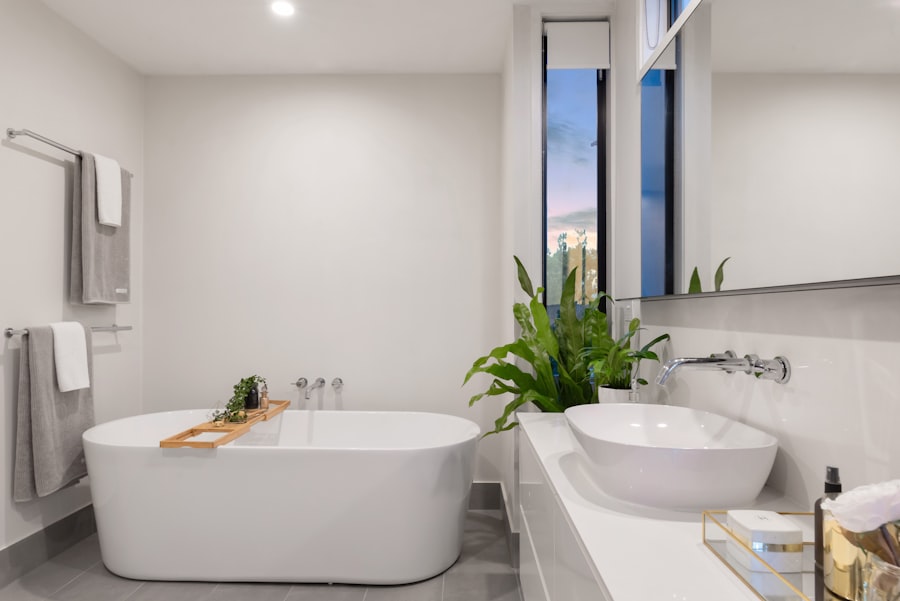
You can organize a rental bathroom without losing your deposit
Almost every good bathroom storage idea assumes you own a drill and permission to use it. Renters get neither. The good news is that the damage-free category has grown up considerably — the honest limitation is not whether it holds, but how much and where. Understand those two things and a rental bathroom can be as organized as any owned one.
Know what each mounting method can actually hold
Adhesive strips and hooks are rated per pair, and bathroom humidity cuts real-world performance. A hook rated for eight pounds will hold a dry robe indefinitely and a soaked bath sheet only briefly. Suction cups need glass or perfectly smooth glazed tile — they fail on textured stone, matte tile and anything with grout lines under the cup. Tension rods and poles carry the most weight of all, because they transfer load into the structure rather than the surface, and they leave nothing but a faint circle behind. As a rough working rule, treat any adhesive rating as half its printed value in a bathroom, and never hang anything above a toilet or a glass shelf that you would mind landing hard.
Prep the surface, or nothing sticks
Ninety percent of adhesive failures are contamination. Wipe the mounting spot with isopropyl alcohol — not an all-purpose cleaner, which leaves a surfactant film — let it dry completely, press the mount for thirty full seconds, then wait an hour before hanging anything. Skipping that cure hour is why the towel rail hits the floor at 6 a.m.
Avoid mounting adhesives directly inside the shower spray zone. Even good products fail after months of direct hot water. Put adhesive hardware on the dry side of the shower wall, on the door, or outside the enclosure entirely.
Lean on freestanding pieces first
Before you stick anything anywhere, ask whether a freestanding unit does the job: an over-the-toilet bridge shelf, a slim three-tier rolling cart, a ladder rack leaning against the wall, a stacking set of lidded bins under the sink. None of these touch a wall in a way a landlord can object to, and all of them move with you. In a rental you are also buying furniture for the next apartment — freestanding pieces survive the move, adhesive ones do not. Look for units with adjustable feet, too: rental bathroom floors are rarely level, and a wobbling three-tier cart full of bottles is a nightly irritation.
Use the tension rod trick under the sink
A short spring-tension rod wedged across the width of the under-sink cabinet, a few inches below the shelf line, becomes a hanging rail for spray bottles. Their trigger handles hook right over it, and you get the entire cabinet floor back for bins. It costs a few dollars, installs in ten seconds and leaves no trace. The same trick works inside a narrow linen cupboard, where a rod at mid-height turns one deep shelf into two usable ones.
Remove everything the right way
When you move out, warm the adhesive with a hair dryer for twenty seconds and pull the release tab slowly, straight down and parallel to the wall — never outward. Outward pulls take paint with them. For stubborn residue, a little rubbing alcohol on a cloth and patience beats scraping. Photograph each wall before you mount anything, so you can prove the original condition at inspection.
Write down what worked
Keep a note on your phone with the door thickness, the tension pole height, the gap width beside your vanity and the tile type. In the next apartment those four measurements will save you two return trips, and half your existing setup will fit straight into the new room.